The youngest of five
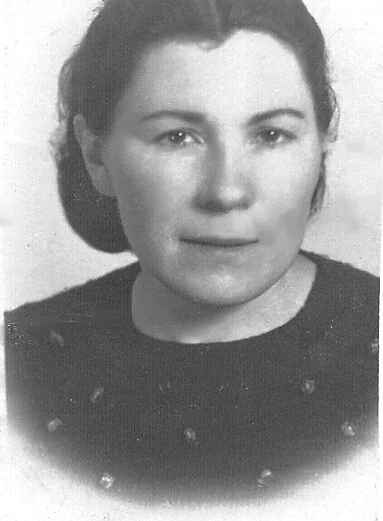
My grandmother Masha was born on November 25, 1916, in Nevarėnai, known as Nevaran. She was the youngest of five children. Her father died before she was born, and her mother died when she was 12.
Growing up, I knew about two of her older sisters, Elka and Razel. Elka had emigrated to Palestine, now Israel, before the war. When the Soviets took over Lithuania, Razel was sent to Russia. After the war, she rejoined the family in Israel.
During my research, I found records of Masha’s oldest brother, Gersh Wolf: a marriage record and records of tax payments. Neither I nor Masha’s daughters had heard of him. So far, I have found nothing that tells me what happened to him during the war or afterward.
I also found records of another brother who died when he was just eight days old. He had never been mentioned in our family. He is buried in the Telšiai cemetery in Lithuania.
An education, and a classroom of her own
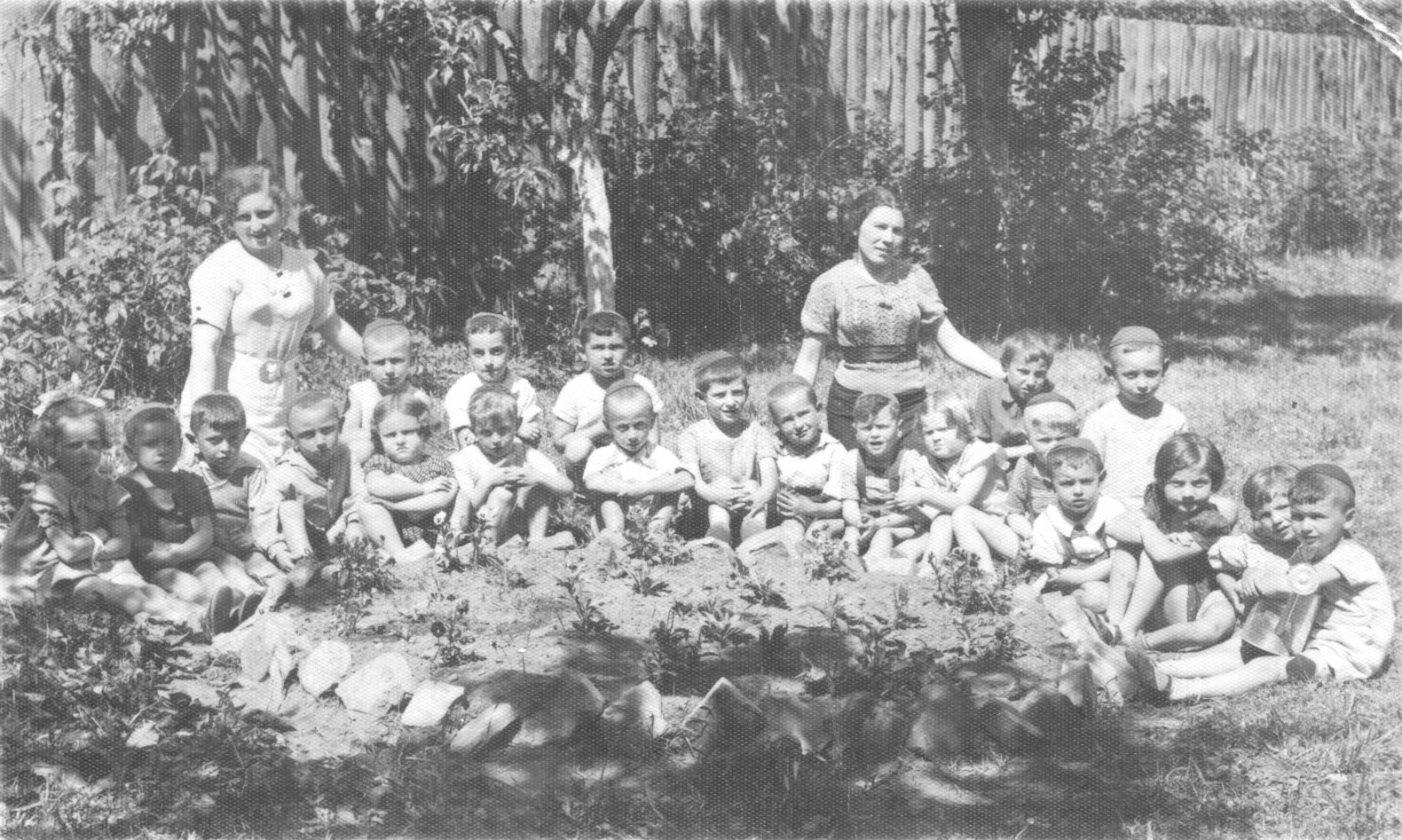
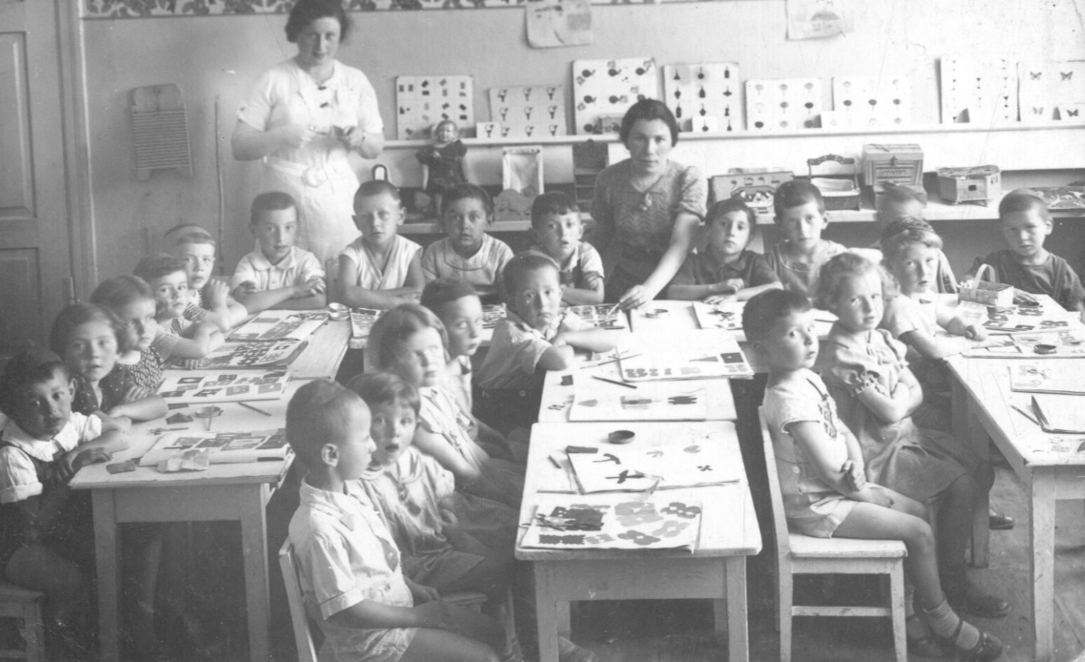
Masha was the only one of my grandparents to continue her education beyond primary school. She attended a women’s teacher-training program in Telšiai, graduated and became an elementary teacher in Šiauliai.
From Šiauliai, she sent photographs to her sister Elka. I still have those photographs. They are part of the record of her life before the war, when she was a young teacher keeping in touch with family abroad.
Her later refugee card records training for kindergarten work and six years of experience as a kindergarten teacher in Lithuania. Alongside the family’s account of her elementary teaching, it preserves another detail of her work with children.
Meeting Aryeh in the Shavli ghetto
Masha was living in Šiauliai when the ghetto was formed. Shavli is the city’s Yiddish name. It was in the ghetto that Kalman Lurie introduced her to Aryeh, my grandfather.
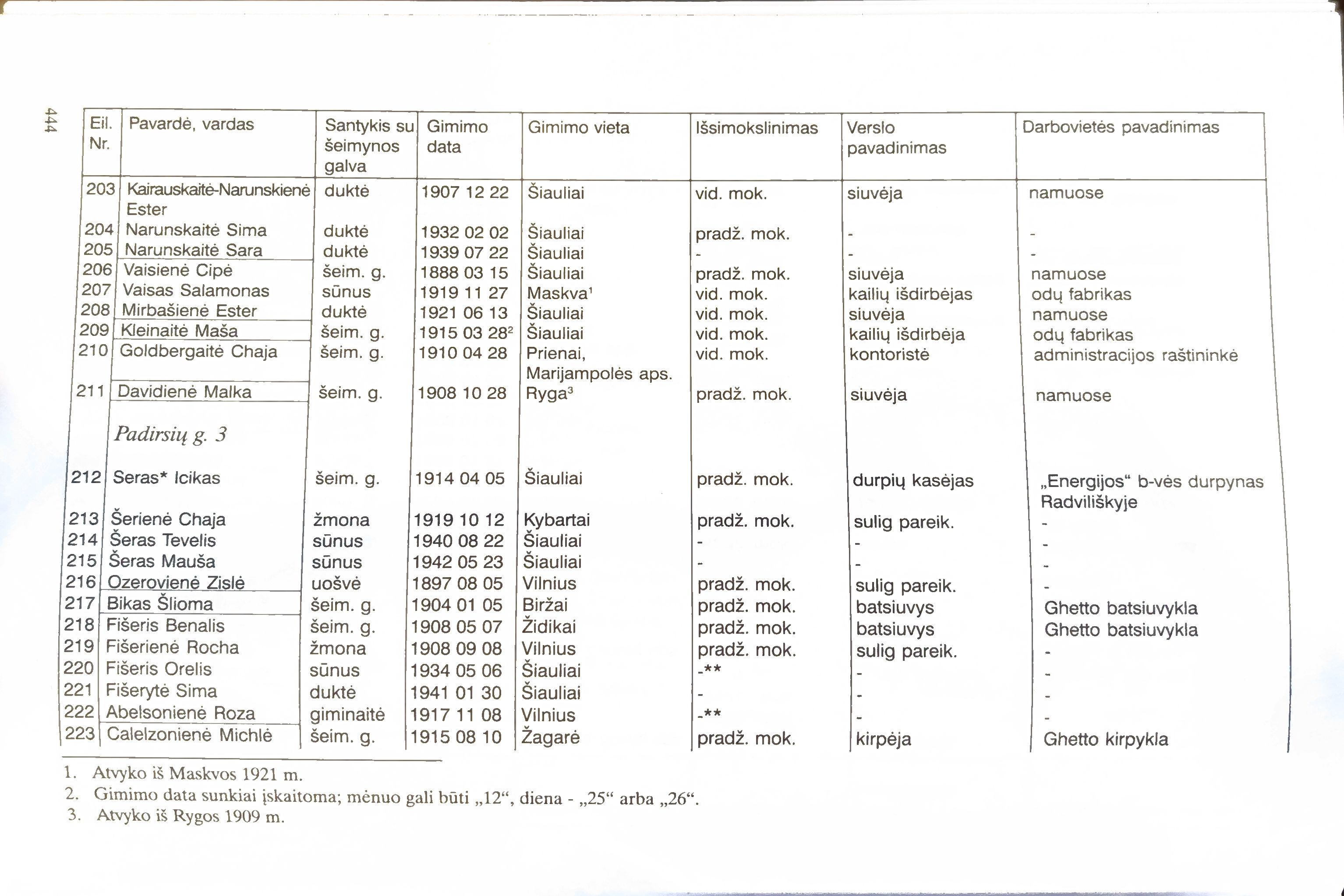
In the 1942 census book, I found my grandmother listed as Kleinaitė Maša. Her work is recorded as fur processing at a leather factory. Before the war, she had trained to teach children. Here, the record preserves a different part of her life in the ghetto.
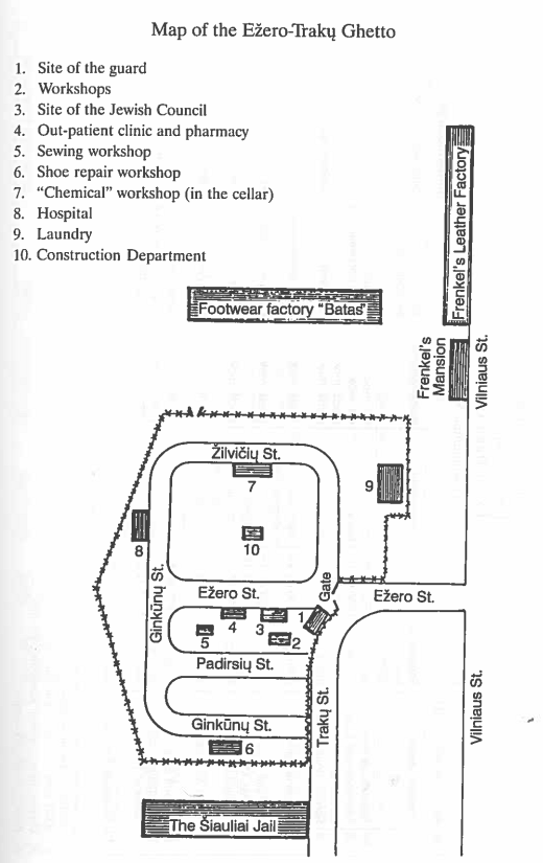
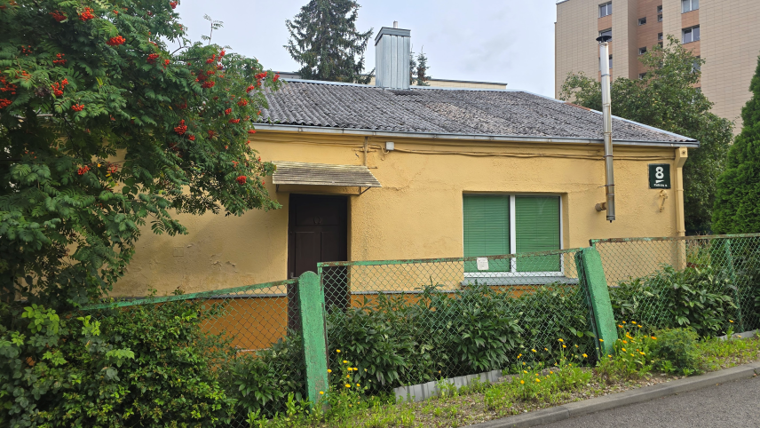
My research in the book places her at 8 Padirisui, with 42 other people listed at that address: 43 people, including her.
Historical accounts describe crowded living conditions, food shortages and persecution in the ghetto. They give some sense of the conditions around her, even where her own daily experiences are not yet known.
Book catalogue: National Library of Israel.Open full-size image →
November 5, 1943: the children were taken
On November 5, 1943, trucks arrived outside the Šiauliai ghetto. Workers were first told they could not leave, then ordered out to their jobs. Families were left trying to decide whether to hide or go to work. Inside the ghetto, SS men and their helpers searched homes and hiding places, rounding up children, older people and those who were sick or disabled.
Hundreds of children were taken from their families. Some mothers who refused to let their children go were taken with them. When workers returned that evening, they came back to families crying for those who had been taken. Survivors Nesse Galperin Godin and Salomea Abramovich recalled the cries they heard on their return.
The children taken in the roundup were deported to Auschwitz, where they were murdered. The roundup began in the ghetto, but their deaths took place far from home. Some children survived by remaining hidden; the loss of so many others changed the lives of the families left behind.
For my grandmother, this was the end of her life as a teacher. She never taught again. For the rest of her life, being around groups of children could bring her to tears.
Finding a way out
In the aftermath of the roundup, Kalman and Aryeh left the ghetto, looking for somewhere they could survive. Kalman later told his grandson Gal how they searched for a way to stay alive outside its fences.
The two men tried to reach partisans, who refused to take them in. A gamekeeper helped them prepare a shelter at a former charcoal-making site in the forest near Shukyan. Once they had somewhere to hide, Kalman returned to find out what had happened in the ghetto and to seek news of Masha.
Our family’s account fills in the next part: Masha joined Kalman and Aryeh in hiding. The men had left first; she reached them after they had found shelter.
Together in hiding
Masha, Aryeh and Kalman survived in hiding until July 1944, when Soviet forces reached the area. Kalman’s account describes an underground shelter, an oven they built and food obtained with the gamekeeper’s help.
For my grandmother, leaving the ghetto had meant joining the two men in that uncertain refuge. Their survival depended on keeping the shelter hidden and continuing to obtain food. When they emerged from hiding, the war had not yet ended, and their journey together was far from over.
By August 1944, my grandparents were listed as married. I do not know whether they married while in hiding or shortly after liberation.
Across borders to Italy
After the war, Masha and Aryeh left Lithuania. Our family’s account describes a journey through Poland, Germany and Austria before crossing into Italy, with danger at the borders and the need to conceal their identity. The exact route and sequence still need to be checked against Masha’s interview.
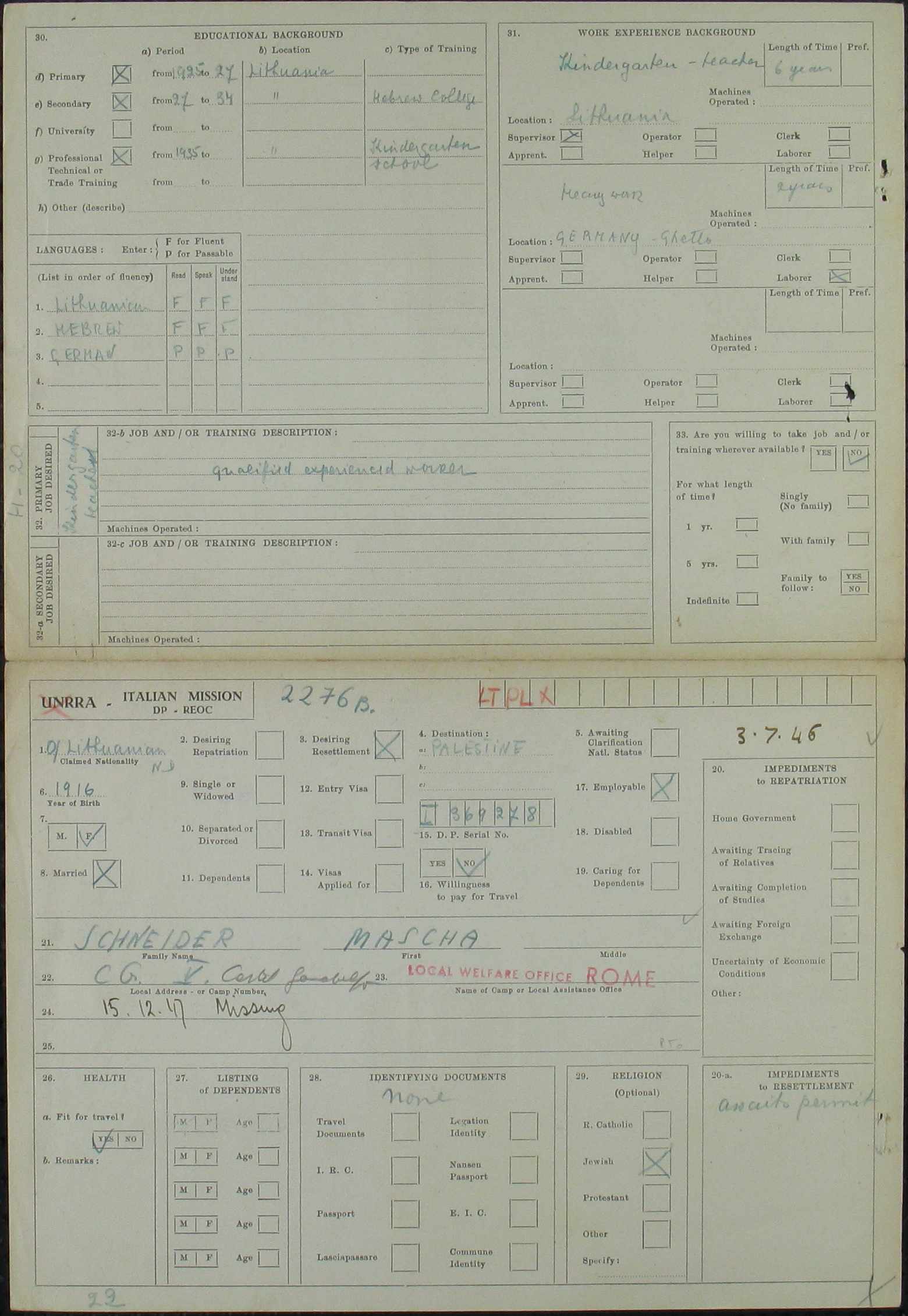
By 1946, they were living as refugees in Italy. Masha’s UNRRA Italian Mission card records her name as Schneider Mascha and gives Palestine as her desired destination. It also preserves her teaching background, linking her prewar life to the future she was trying to reach.
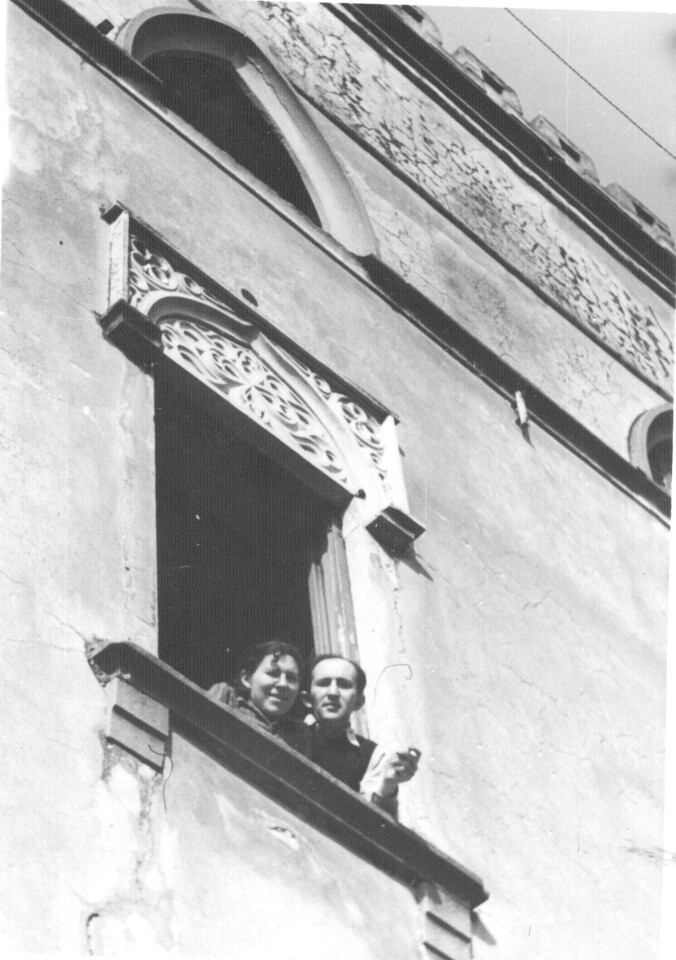
Her card records a wish to leave Italy for Palestine. The next photographs show Masha and Aryeh during their time in Italy, between the years of hiding and their move to a new home.

Shifra, and a new home
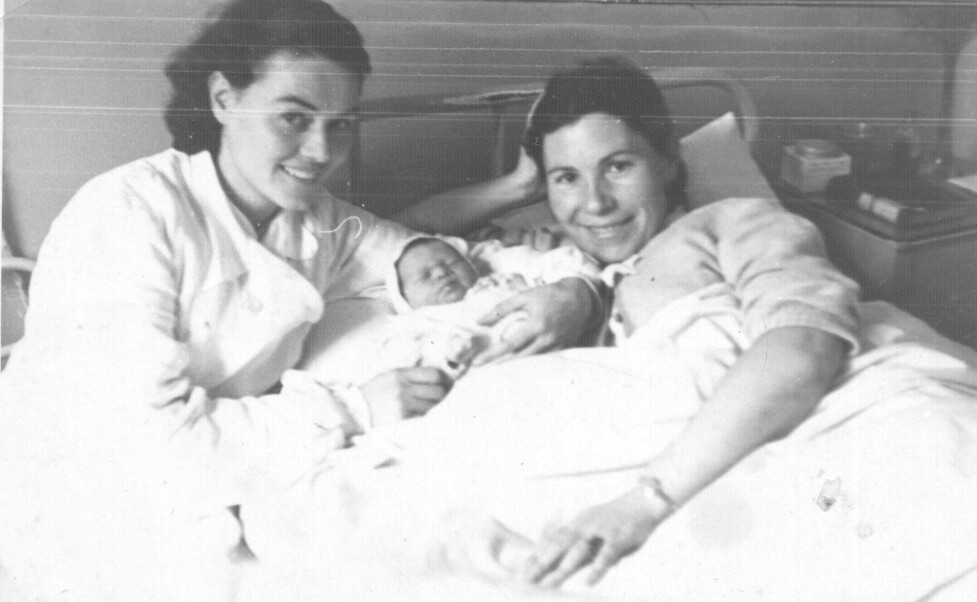
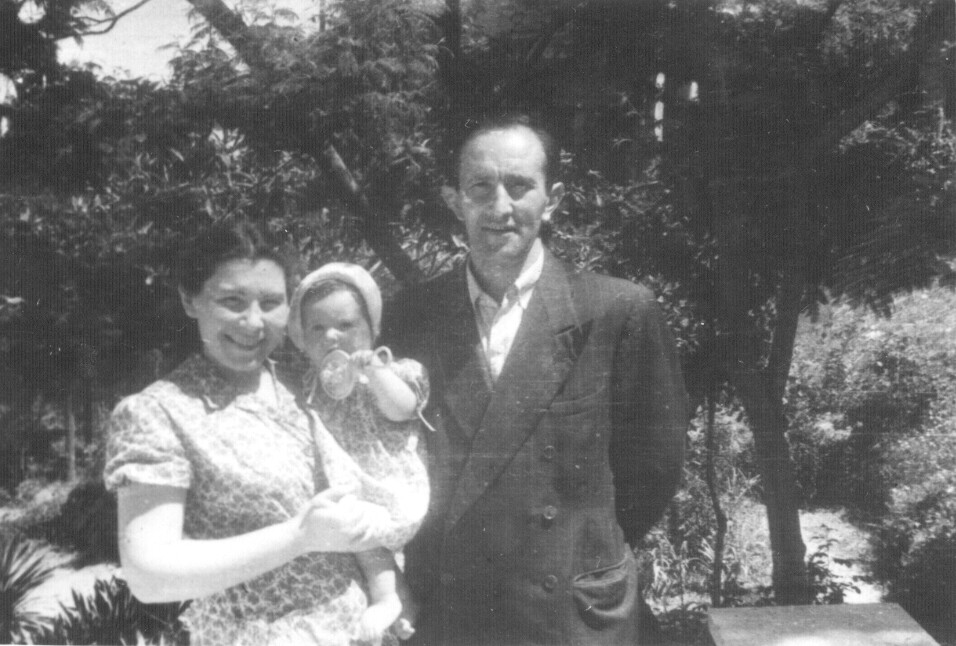
Their daughter Shifra was born on November 28, 1946. One of our family photographs shows Masha with her newborn daughter in Italy. Another shows Masha and Aryeh together with Shifra.
In 1947, Masha, Aryeh and Shifra immigrated to what is now Israel, then British Mandate Palestine. In her interview with Gal Rosen, Masha described their journey through Aliyah Dalet, a clandestine immigration route. I do not yet know the exact transport or departure and arrival dates.
The children and grandchildren who followed are part of why I share this history. In the photograph of Masha holding Shifra beside Aryeh, the story is also the beginning of our family’s next generation.