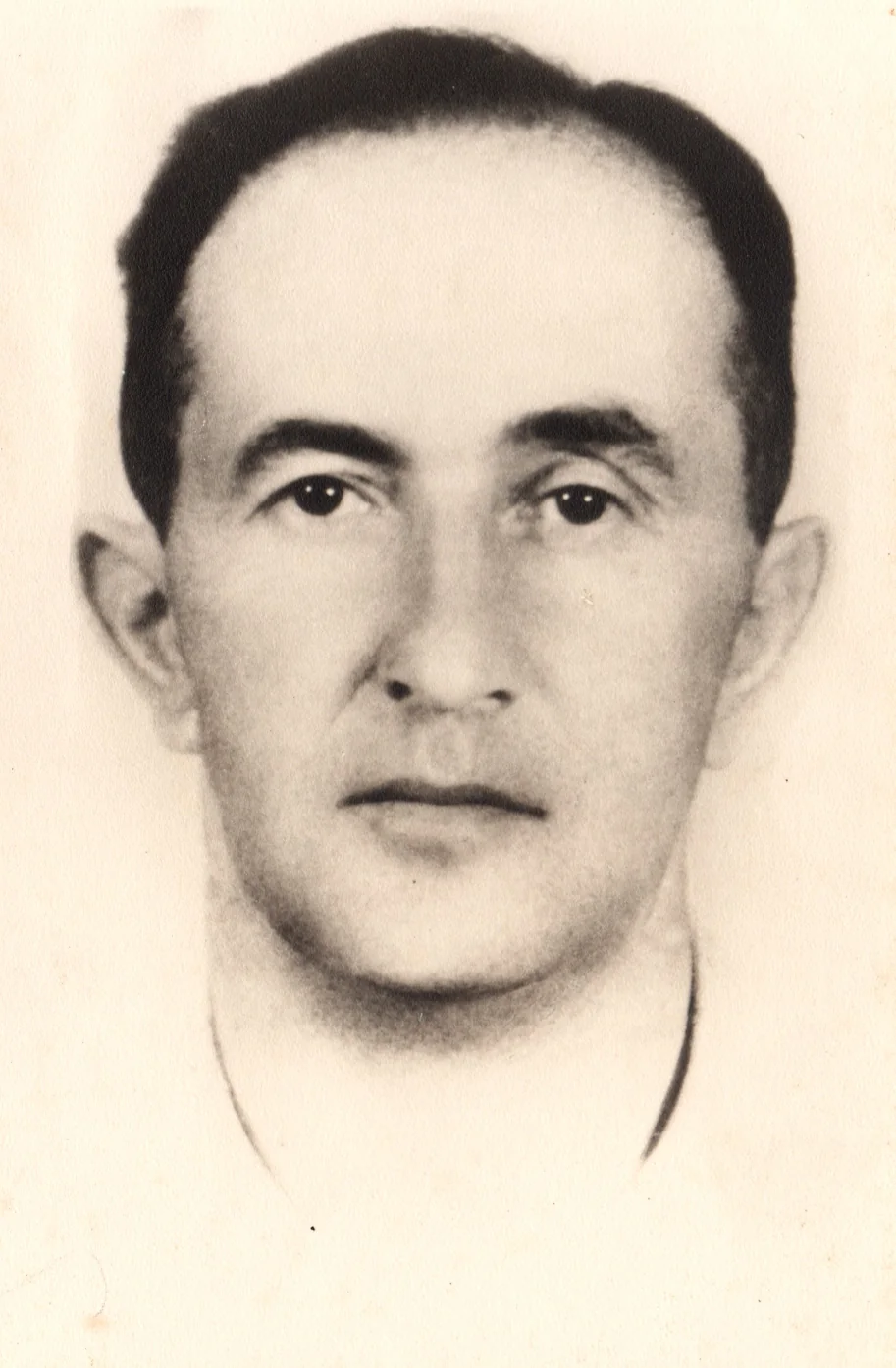
Before the war
For many years, Aryeh’s family had owned a lumber mill in Šaukėnai, known as Shukyan in Yiddish. His father ran the mill, while Aryeh began his working life as a forester, learning his way around the surrounding forests. When his father died before the war, Aryeh took over the family business.
His two sisters, Leja and Sara, both had children of their own. The family was active in the town’s Jewish community. Within that community, Aryeh was regarded as one of its informal leaders.
The war reaches Shukyan
Germany invaded the Soviet Union on June 22, 1941. Four days later, German troops occupied Shukyan. Local Lithuanian activists subjected Jewish residents to forced labor and abuse, while restrictions cut them off from their neighbors and the surrounding countryside. Ten Jews, most of them young, were arrested and taken to prison in Šiauliai, known in Yiddish as Shavli.
Leaving Shukyan
My grandfather’s testimony helped preserve the story of what happened in Shukyan. On July 25, the Jewish community was ordered to pay 50,000 rubles or face expulsion. The demand was announced during synagogue services.
Aryeh went to Gayudoshas, a forester he knew. Gayudoshas told him that the Jews’ fate was already decided: “Their lot has already been cast.” Jewish men had disappeared from many of the forests. When my grandfather asked where they had gone, Gayudoshas told him to use his imagination and warned that the same would happen in Shukyan.
Gayudoshas then turned to Aryeh’s property. If my grandfather signed over his mill, house and fishpond, with the priest authorizing the document, Gayudoshas would try to support his family. Aryeh refused. He returned to the synagogue and told the others what had been said.
That same morning, other Jews approached the priest for an explanation. He told them that notice of their annihilation had arrived. Then he said: “In anticipation I advise you to think of what questions you have to ask Jesus.” He told them to pay the ransom.
After the Sabbath, the community collected money and valuables and handed them over. Paying did not protect them. On July 28, Jews were forced from their homes and gathered in the synagogue, where their remaining valuables were taken. Under guard, they were led to the Rosenthal estate outside Shukyan and confined in its farm buildings.
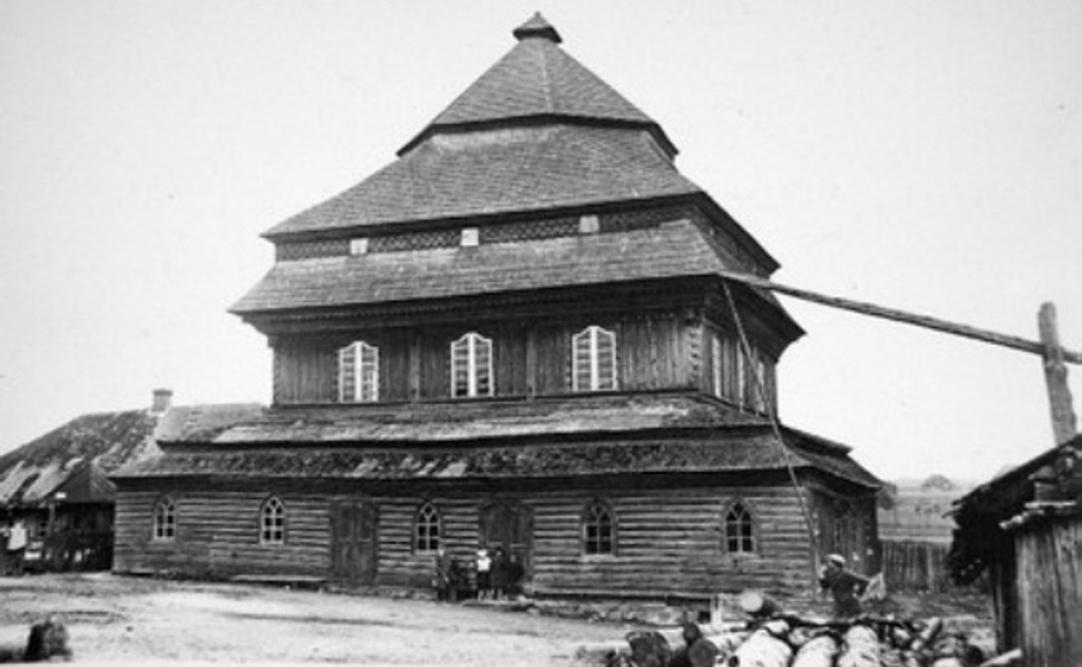
Source: JewishGen, Preserving Our Litvak Heritage.
At the Rosenthal farm
Roughly 330 people were confined at the Rosenthal farm, including families brought there from nearby villages. On July 30, the guards ordered everyone into the granary. They separated 128 people: 89 children, 20 mothers, 15 other women and four males. About 200 people remained in the granary.
My grandfather was one of the four males, along with three people unrelated to him. Gayudoshas still hoped to obtain Aryeh’s mill, house and fishpond. Chaim Shlomo Kremer was also set aside. Shmuel Kalmonovich, only 17, had been recommended by a local Lithuanian leader. The fourth was a tanner who had work left to finish for influential Lithuanians.
Those separated were locked in the farmhouse under guard. Aryeh had been given a temporary reprieve.
Learning what had happened
From inside the farmhouse, the prisoners watched as the people left in the granary were led away. Later that evening, when they were allowed into the yard, they asked where the others had gone. They were told the group had been taken to work.
The next morning, my grandfather went into the yard and saw Ignas Kaminskas, a local man who had brought them food and helped them during the previous weeks. Kaminskas began to cry. Aryeh pressed him to explain where the people had been taken.
Kaminskas told him they had been led to the Dolkiskis forest and murdered. He had watched the killings from a distance. My grandfather returned to the house and told some of the others what Kaminskas had said. They could not believe it; they said such a thing could not have happened.
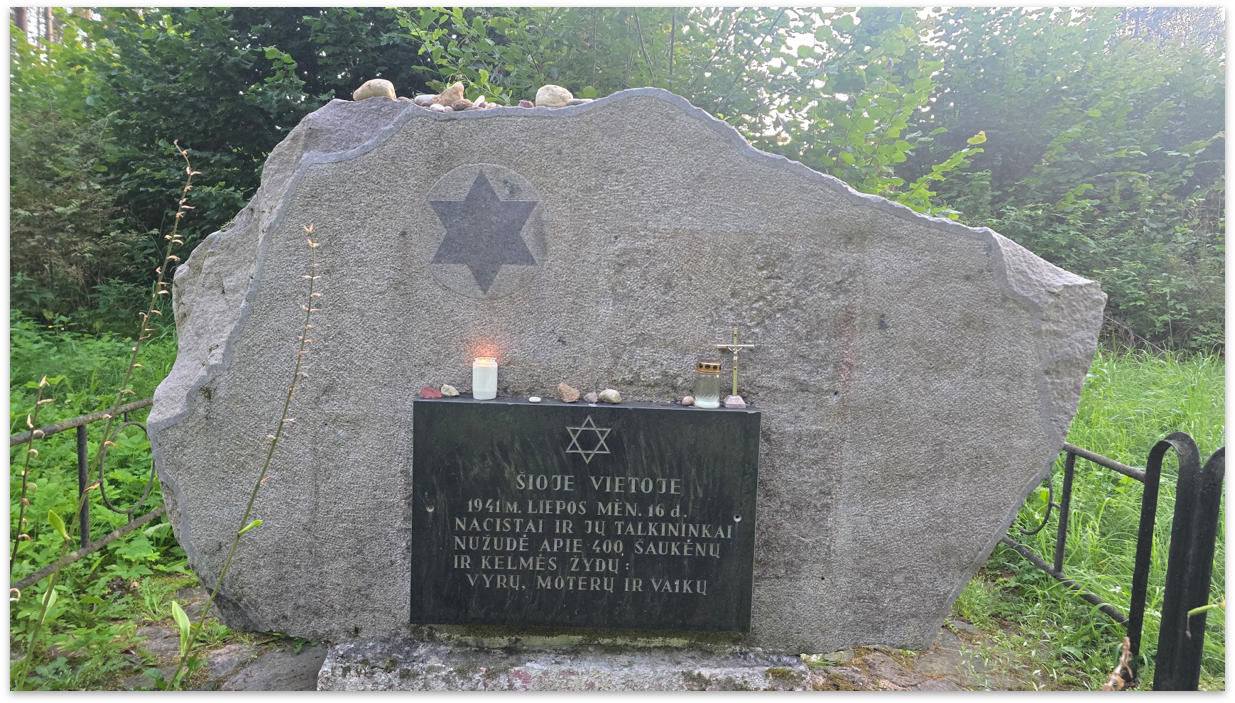
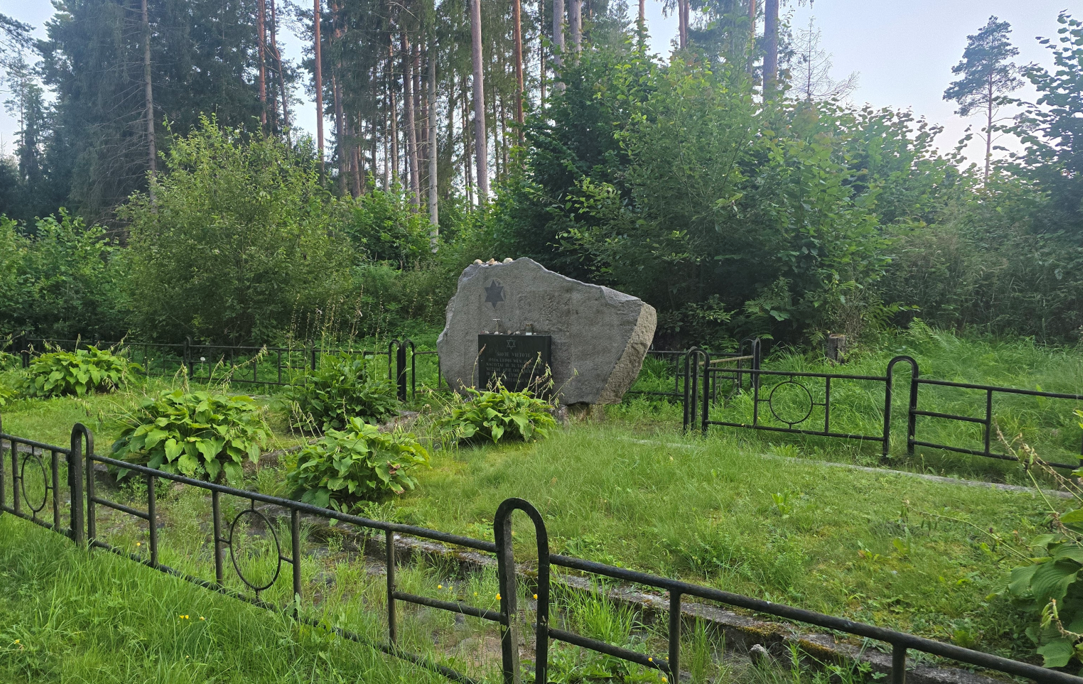
Suvila and the journey to Žagarė
The people who remained alive at the Rosenthal estate were divided among five locations. The largest group went to Suvila, to a farm beside a flour mill. There were 50 small children and 15 mothers and other women caring for them.
My grandfather went to the flour mill in Suvila, together with his sisters and their families. In August, he visited the nearby farm, trying to share what he knew with the people held there.
On August 29, the scattered groups were gathered and taken by cart to Žagarė. Aryeh and his family were displaced once again, this time to a ghetto.
Inside the Žagarė ghetto
In Žagarė, the Jews of Shukyan joined families forced from other nearby towns. The ghetto occupied streets beside the market square. Jewish residents had been confined to this part of town, and the arrival of displaced families brought many more people into the same area.
Families faced hunger and overcrowding, without adequate sanitation or medical facilities. Forced labor and repeated abuse shaped life in the ghetto. The accounts describe these conditions, but they do not tell us where my grandfather and his family stayed or what their own days there were like.
The perpetrators also forced people to take part in the humiliation of their rabbi, Yisrael Reif. Dov Levin’s history of Žagarė, in Melanie Rosenberg’s English translation, records: “Before leaving for their labor, the Jews were compelled to spit at Rabbi Reif, or face a penalty of death.” The rabbi urged his congregants to comply so that they would not be killed.
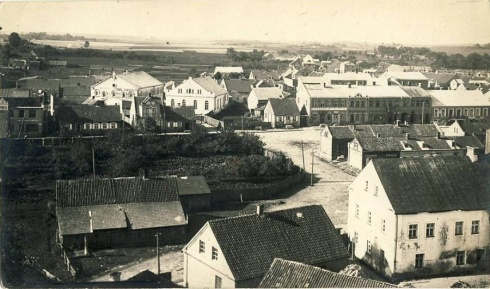
Source: Lithuanian Jewish Community, “Mysteries of the Žagarė Ghetto.”
Back near Shukyan
My grandfather left Žagarė with a group of 16 and returned to the forests near Shukyan. His sisters, Leja and Sara, and their families stayed behind. The group scattered among hiding places, relying on local farmers for food and shelter.
During September, those hiding near Shukyan sent food parcels through local Lithuanians to their families in Žagarė. Letters acknowledging the parcels came back.
The family left in Žagarė
While my grandfather was hiding near Shukyan, the Jews still in Žagarė were caught in another massacre. On October 2, 1941, they were ordered to the market square and told they would be taken to work. Armed men began shooting there. Those who survived the violence in the square were taken to Naryshkin Park and murdered. German SS men and local Lithuanian perpetrators took part in the killings.
Those near Shukyan later learned that the ghetto had been destroyed and that food parcels had not been delivered, despite the acknowledgments they had received.
I believe my great-aunts, Leja and Sara, and their children were among those murdered in Žagarė. I have found Yad Vashem records placing some of the children’s deaths there, but I have not yet confirmed the fate of every member of their families.
Pressure to convert
While my grandfather was hiding near Shukyan, some of the farmers helping the group began demanding that they convert to Catholicism. The priest tried to persuade Aryeh, too. My grandfather resisted, telling him that he did not consider himself religious. The others converted, but still lacked reliable protection and continued looking for safer places to hide.
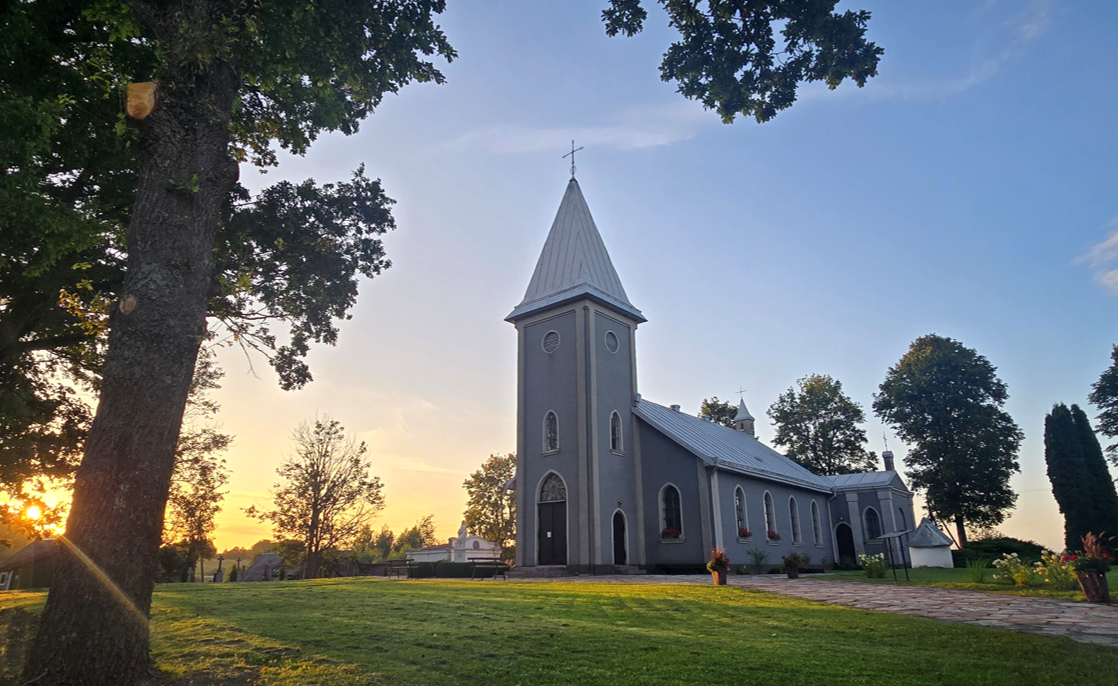
Eight young Jews who had escaped from Žagarė sought refuge with the priest in Shukyan and converted to Christianity. They were still murdered and buried in the Catholic cemetery. Their memorial inscription gives the date as November 1, 1941.
A memorial tablet was erected in the early 1990s. It remembers the eight young people whose baptism had not saved their lives.
Escape at the last moment
One November evening, a barking dog sent him out of a farmhouse toward the forest. Pilatzkis, a farmer who had sheltered him, came to warn him that men were searching for Jews. Standing in the forest, my grandfather did not know what to do next.
Aryeh fled deeper into the forest and spent the night with Katkus, a forest guard he knew. Learning that others had been caught and the search continued, he set off for Šiauliai, known in Yiddish as Shavli. A week later, he reached the ghetto.
Life in the Shavli ghetto
Shavli is the Yiddish name of Šiauliai, the city where my grandfather reached the ghetto in November 1941. Sonia Kaminsky and Ahuva Klor, also from Shukyan, reached the ghetto too.
It was here that Kalman Lurie introduced my grandfather to Masha, my grandmother. While living in the ghetto, Aryeh worked at the Frenkel leather factory. Kalman would later become his companion in the search for a hiding place outside the ghetto.
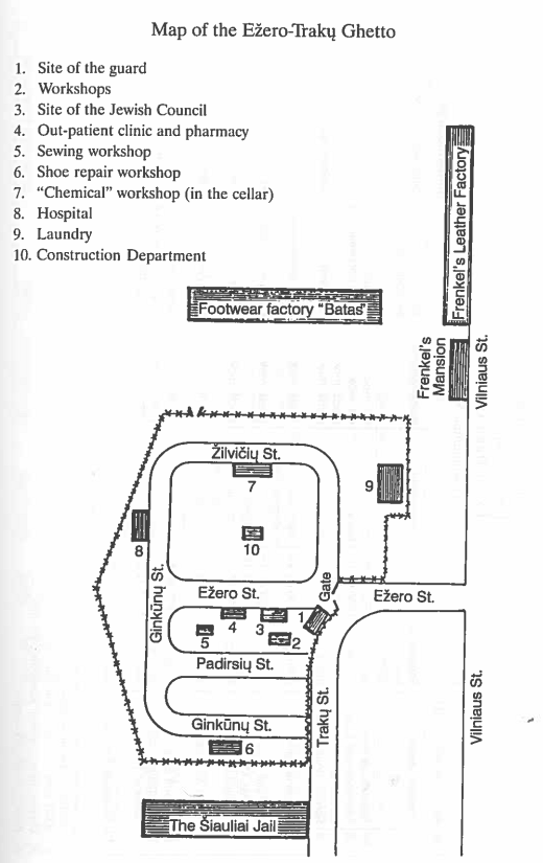
The ghetto had two separate sections, Kaukazas and Ežero-Trakų. Families lived in cramped quarters, with attics, storerooms and even stables converted into places to sleep. Prisoners were sent to work in factories, workshops and at the nearby airfield. Bringing food back through the gates could mean arrest. These histories help me understand the conditions around my grandparents, even where I do not have an account of their own daily lives.
The census taken on May 26–27, 1942 is reported to have recorded at least 4,665 Jews in the ghetto. This is a count from several months after Aryeh arrived. The surviving census records later formed the basis of The Šiauliai Ghetto: Lists of Prisoners, 1942, published by the Vilna Gaon Jewish State Museum in 2002. I still need to check the reported total against the book’s census summary.
In my research, I found my grandfather listed at 25 Ginkūnų Street, with another 141 people listed at the same address. The map below shows Ginkūnų Street within the Ežero-Trakų ghetto. The photograph shows the building at that address today.
The page I have shared lists him as Šneideris Leiba, entry 695. It records his birthplace as Šaukėnai and his occupation as a carpenter.
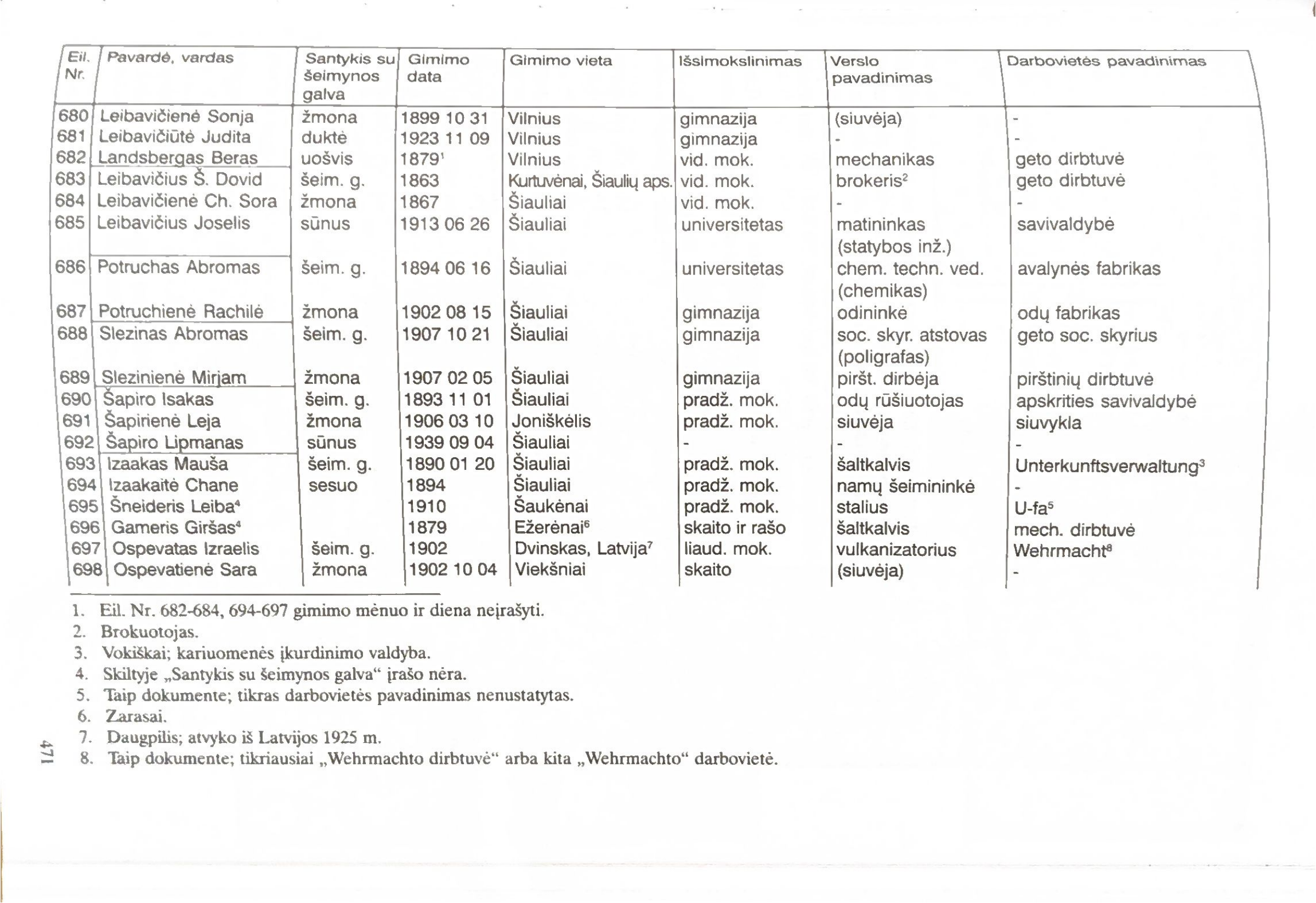
Open the supplied record page (PDF).Open full-size image →
Book catalogue: National Library of Israel.Open full-size image →
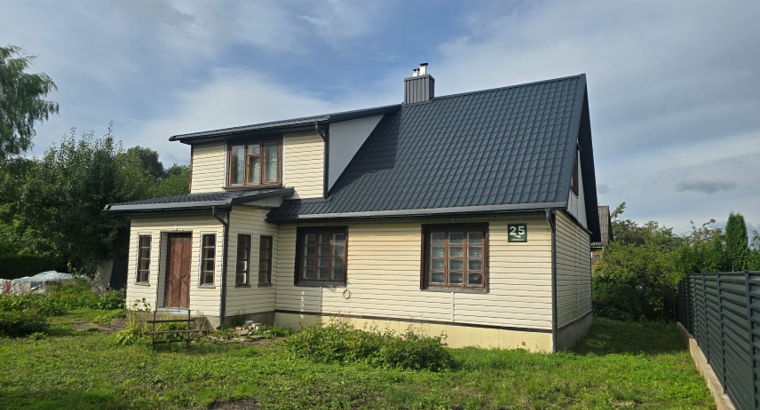

Building identification: Aušros Museum.
Sources
- Šaukėnai (Shukian): community history and Aryeh’s account
- Šiauliai: a history of the Jewish community and ghetto
- The Šiauliai Ghetto, by Arūnas Bubnys
- The Šiauliai Ghetto: Lists of Prisoners, 1942
- The Šiauliai Ghetto: Lists of Prisoners, 1942
- Masha Schneider’s interview with Gal Rosen
- The Frenkel family villa and leather factory
Hiding in the forest
Kalman later told the story of their escape to his grandson Gal. After the roundup and deportation of children and older people from the Šiauliai ghetto on November 5, 1943, he and my grandfather left for the forests near Shukyan. Aryeh knew the area. They walked for several days to a man who might put them in touch with partisans, but the group refused to take them in.
A warning that searchers were approaching sent them back into the cold. They spent a night inside a hollow tree. A gamekeeper Aryeh knew eventually helped them prepare an underground shelter at an old charcoal-making site. They built a small oven and gave him money to buy food.
From that shelter, Kalman returned to find out what had happened in the ghetto and to seek news of Masha. At that point, Masha joined him and my grandfather in hiding. Aryeh, Masha and Kalman survived in hiding until July 1944.
A family after the war
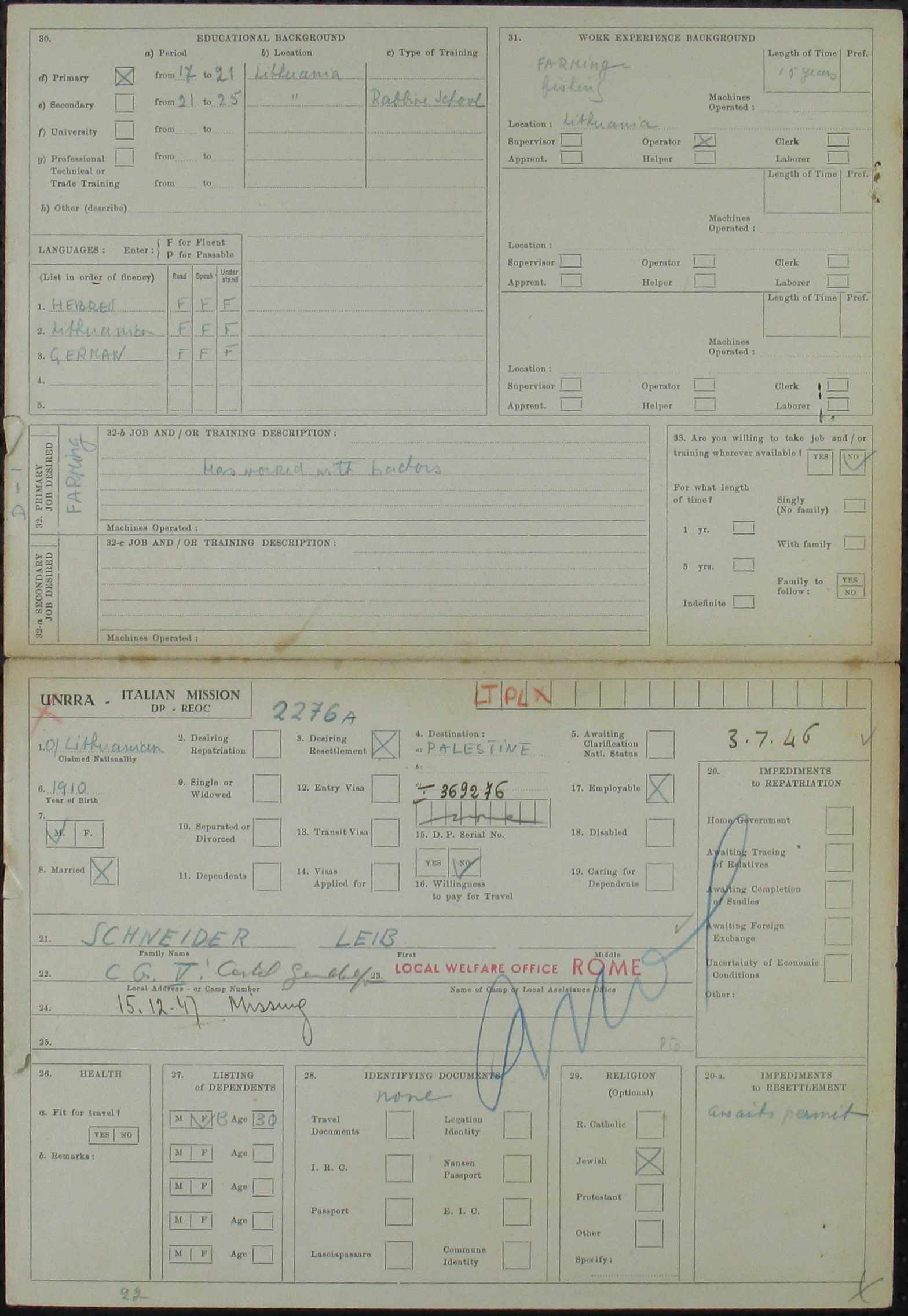
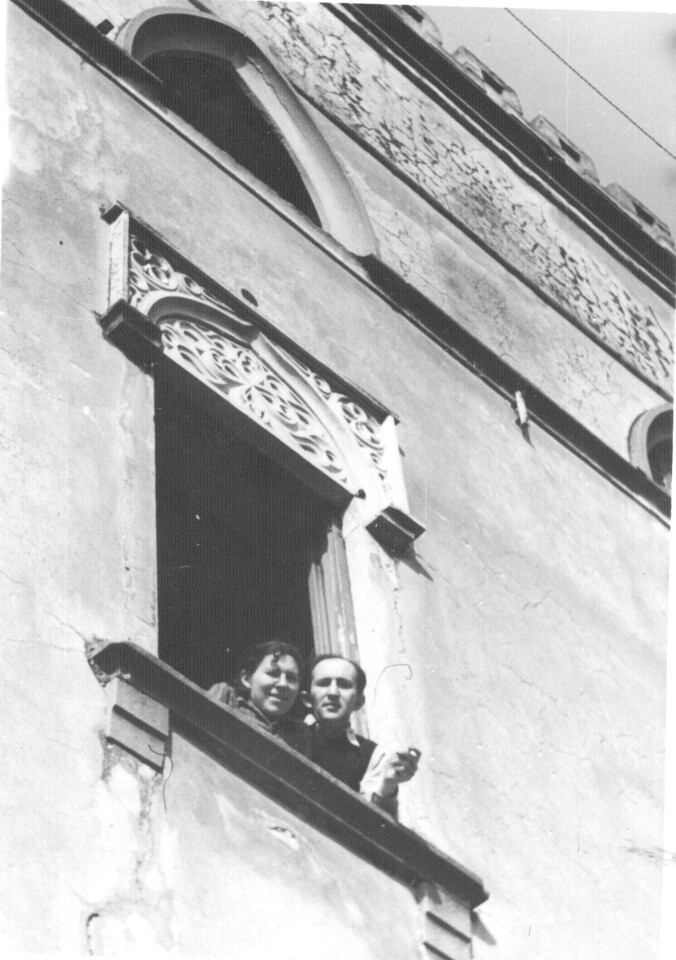
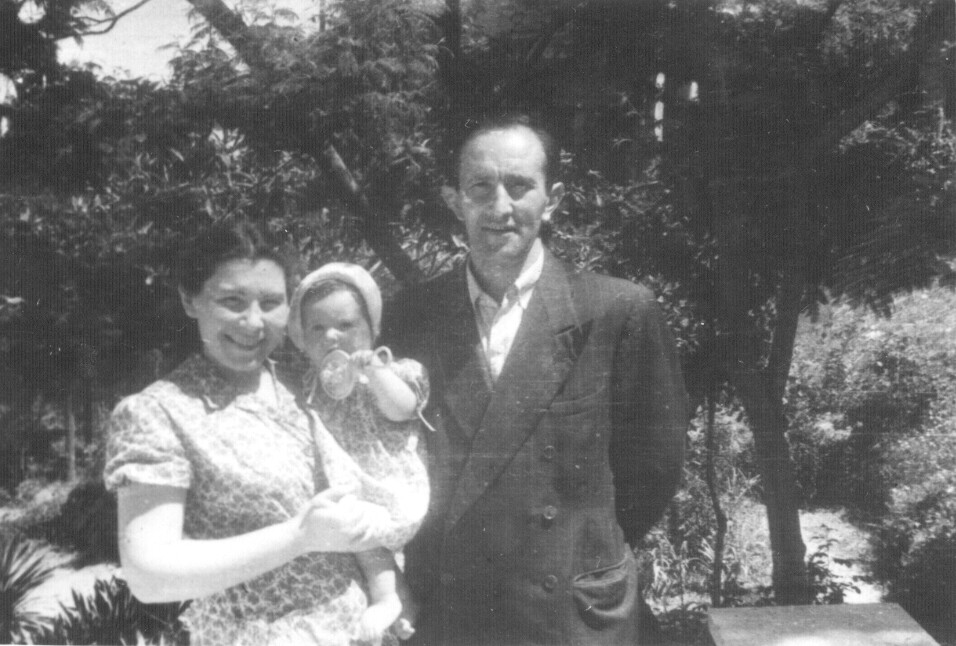
Aryeh and Masha’s lives continued through displacement and refugee camps in Italy. Their daughter Shifra was born in 1946. Their journey toward a new home is part of the story, too: liberation did not restore the world they had lost.

A grandfather I never met
I never met my grandfather. I came to know his story through writings I discovered while researching our family history. Even his daughters had never seen them.
Source note
Arik Cohen’s account of his family and research; original documentation is incomplete.